
Your show has 500 loyal listeners who never skip an episode. A brand tells you that is not enough. Here is what the data actually shows.
Podcast ad spend hit $2.43 billion in 2024, and sponsors paid podcast sponsorship rates that reward audience alignment over raw size. Brands are hunting for the right podcasts right now, not only the biggest ones. The question is whether your show passes their checklist.
This guide unpacks exactly what podcast sponsors look for before they sign a deal. You will learn which five data points they always request, which seven red flags make them walk away, and how to position your podcast so the decision becomes easy.
What do podcast sponsors look for? Sponsors evaluate five core signals before signing: 30-day download numbers per episode, clear listener demographics, episode completion rates above 60 percent, audience engagement proof such as reviews and social shares, and consistent growth trajectory. Niche shows with tight audience alignment regularly outperform larger, general podcasts on every metric that matters to sponsors.
1. Why Download Numbers Do Not Tell the Full Story
Most podcasters believe big download counts automatically unlock sponsorship deals. That assumption costs real opportunities.
Yes, downloads still matter. But in 2026, sponsors dig deeper. They care more about who listens and what those listeners do next. Engagement metrics now outweigh raw download counts in most sponsor evaluations, because a number showing how many people pressed play says nothing about whether those listeners acted on what they heard.
A tight-knit audience that acts on your recommendations is commercially more valuable than a large audience that barely pays attention. Sponsors want proof that your listeners care about what you say. That proof shows up in engagement signals, not download totals.
2. The Five Critical Data Points Every Sponsor Requests
When a sponsor reaches out or when you pitch them, they will ask for specific numbers. Have these ready. Clean data makes you look professional and speeds up the decision.
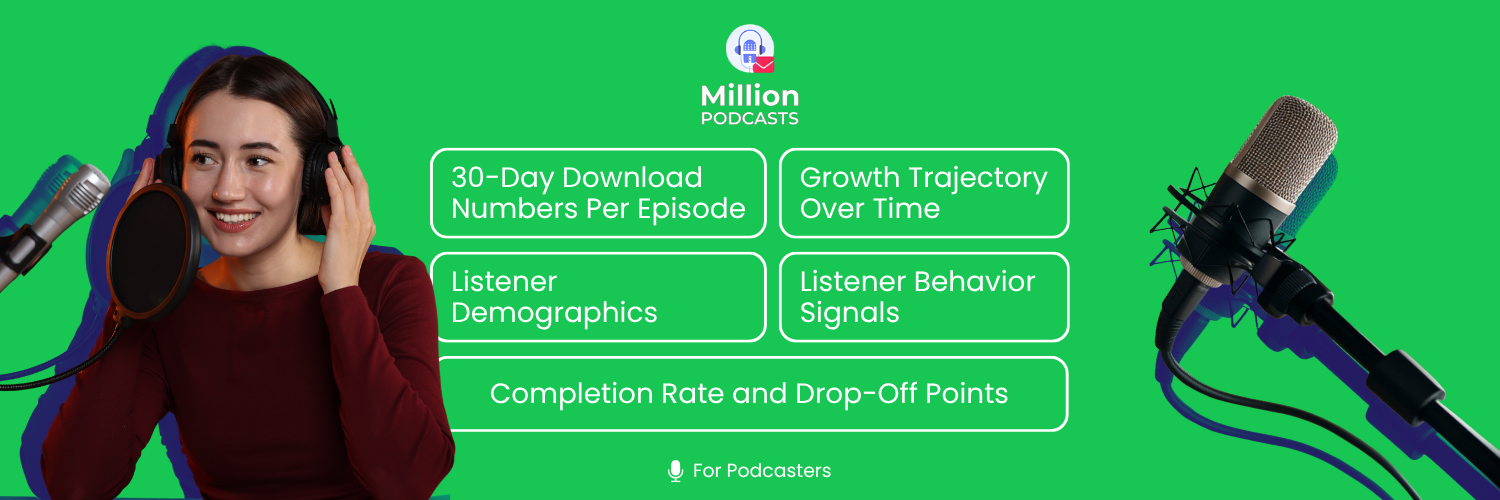
30-Day Download Numbers Per Episode
Advertisers care about how many times an episode is downloaded within the first 30 days of its release, as this is the industry-standard metric. Not total downloads across your entire back catalogue. Not follower counts. Just the 30-day window per episode.
That window shows real reach and gives sponsors a consistent baseline to compare your show against others. Track this number for your last ten episodes, then report the average.
Listener Demographics Breakdown
Sponsors want specifics. They need to know:
- Age range: What percentage are 25 to 34? 35 to 54? 55 and older?
- Income level: Are your listeners earning $50K, $75K, $100K or more?
- Geographic location: U.S. focused? International? Specific cities?
- Gender split
- Education level
- Job roles or industries
You pull this data from your podcast host analytics or from listener surveys. Even basic demographics help. Modern sponsors want detailed audience insights because they are not just buying downloads. They are buying access to specific listeners.
Completion Rate and Drop-Off Points
Completion rate tells sponsors how many listeners finish your episodes. Mid-roll ad placements consistently outperform pre-roll because listeners who make it halfway through an episode are more deeply engaged and significantly less likely to skip the break.
Shows with high completion rates earn stronger ad recall because attentive listeners actually process the message rather than tune it out. If your completion rate sits above 70 percent, sponsors see that as a green light. Track where people drop off, fix those sections, then show sponsors the improved numbers.
Listener Behavior Signals
How engaged is your audience beyond just listening? Sponsors look for:
- Reviews and ratings: Active listeners leave feedback
- Social media mentions: Do listeners talk about your show online?
- Direct messages and emails: Real fans reach out to you
- Newsletter open rates: If you have an email list, what is the engagement?
- Community participation: Do people show up in your Discord, Facebook group, or comment section?
These signals prove that your audience cares. That matters more than you think.
Growth Trajectory Over Time
Are you trending up or flat? Sponsors favour shows with momentum. Show them month-over-month growth. Even a 10 to 15 percent increase signals that your audience is expanding and your content resonates.
If your numbers are flat, frame it differently. Focus on retention. A stable, loyal audience that sticks around is still commercially valuable. Be honest about the growth pattern.
3. Audience Quality Markers That Make Sponsors Say Yes
Not all audiences are created equal. Sponsors pay premium rates for specific listener profiles. Here is what makes an audience commercially attractive.
High-Intent Listeners Who Take Action
62 percent of listeners have considered using a product or service after hearing about it on a podcast, and 72 percent have visited an advertiser's website after hearing a podcast ad. Sponsors choose podcasts because listeners actually act on recommendations.
If you can show that your audience follows through, sponsors will pay more. Track how many people clicked your affiliate links in the past, how many used promo codes, and how many signed up for free trials. Then put that data in your pitch.
Affluent and Professional Demographics
62.1 percent of adults listen to podcasts from Apple iPhones. Sponsors notice device data because it correlates with income level. iPhone users tend to skew higher income compared to other platforms.
Affluent, professional listeners such as executives, managers, and business owners engage longer and are more likely to act on podcast recommendations, with over 60 percent listening monthly in the U.S. If your show attracts professionals, highlight that in your media kit.
Niche Audiences With Clear Pain Points
A podcast about general tech news competes with thousands of shows. A podcast about cybersecurity compliance for healthcare IT directors? That is a niche. Sponsors targeting that exact buyer will pay premium rates because your audience is pre-qualified.
The narrower your niche, the easier it becomes to find aligned sponsors and command higher rates.
Loyal, Returning Listeners
61 percent of podcasters now focus more on retention than downloads, showing increasing professional maturity among creators. Sponsors noticed this shift. They would rather sponsor a show where 80 percent of listeners return every week than a show with big download spikes but no loyalty.
Retention proves trust. Trust drives conversions. If your audience keeps coming back, sponsors see that as a signal that your recommendations will land.
4. Industry Benchmarks Sponsors Use to Evaluate Deals
Knowing the benchmarks sponsors use to evaluate shows helps you position yours realistically. Sponsors use CPM, cost per mille or 1,000 downloads, as their standard pricing framework. The rate they are willing to pay reflects how closely your audience matches their ideal buyer profile, which is why the engagement benchmarks below carry more weight than your total download count. For a full 2026 breakdown of what rates to set at each audience size, niche, and ad format, see our complete podcast sponsorship rates guide.
Standard Engagement Metrics
Here is what sponsors look for when evaluating whether your audience is truly engaged:
- Review rate: At least one review per 100 downloads
- Social shares: Listeners mentioning episodes at least once per week
- Email open rates: 25 to 35 percent if you have a newsletter
- Click-through on links: 3 to 7 percent of listeners clicking show notes links
If your numbers hit these benchmarks, highlight them in your pitch.
5. Why Do Sponsors Pay More for Smaller Shows?
Scale is not everything. Smaller shows regularly command higher CPM rates than larger ones. Here is why.
The proof sits in the data. In August 2026, the MillionPodcasts database counted how many of the smallest active shows already carry a sponsor:
| Audience band | Active shows | Shows with a sponsor |
|---|---|---|
| Nano, up to 1K monthly listeners | 524.2K | 22.2K |
| Micro, 1K to 10K monthly listeners | 92.5K | 12.8K |
Those sponsored nano shows are not clustered inside one topic. Here is how the 22.2K break down across five common beats:
- Business: 1.8K sponsored nano shows
- Technology: 1K sponsored nano shows
- Health and Fitness: 982 sponsored nano shows
- Society and Culture: 924 sponsored nano shows
- Education: 681 sponsored nano shows
Every count above covers shows that published an episode in the last 12 months. So the question is not whether small shows get sponsored. It is why a brand would choose one.
Niche Targeting Reduces Wasted Spend
A brand selling accounting software for real estate investors does not need to reach a million random people. They need 500 real estate investors who are ready to buy. A focused podcast delivers that audience with zero waste.
Sponsors pay premium rates when targeting is tight. General shows force sponsors to pay for listeners who will never convert. Niche shows eliminate that waste entirely.
High Trust Environments Drive Better Conversions
50 percent of listeners say they trust podcast hosts more than hosts of other traditional media, including radio and TV. That trust translates into higher conversion rates, especially when the host personally endorses a product.
Sponsors know host-read ads outperform pre-recorded spots. A trusted host recommending a product feels like a friend giving advice. That is worth more than impressions from a large, impersonal show.
Less Competition for Ad Inventory
Big shows sell out ad slots months in advance. Smaller shows often have immediate availability. Sponsors who need to move fast or test quickly will choose smaller shows with open inventory over larger shows with long waitlists.
If you can deliver quickly and report results cleanly, sponsors remember that. Speed and flexibility create real commercial value.
6. How Sponsors Actually Make the Final Decision
Understanding the decision process helps you pitch smarter. Here is what happens behind the scenes when a brand evaluates your podcast.
They Compare You Against Other Shows
Sponsors rarely evaluate one podcast in isolation. They review multiple options in your niche and compare engagement rates, demographics, CPM costs, and audience fit. Your job is to make that comparison easy by presenting clean, organized data.
Build a one-page media kit. Include your show description, listener demographics, engagement stats, recent episode topics, and sponsor package options. Make it scannable. Sponsors review dozens of pitches. Clarity wins.
They Calculate Expected ROI Before Committing
Sponsors run math. They estimate how many conversions your show will deliver based on your engagement metrics and their historical conversion rates. If the math works, they move forward.
You can help by showing past results. "Our last affiliate partner saw 47 clicks and 8 conversions from a single episode mention" is stronger than "We have engaged listeners." Specifics convert.
They Check Your Content History for Brand Safety
Sponsors scan your recent episodes. They look for controversial topics, offensive language, or content that conflicts with their corporate policies. They also check your social media presence.
Review your last ten episodes before pitching. If a sponsor in your target category would find something objectionable, address it first.
They Test With Small Commitments First
Most brands prefer pilot deals before locking in long-term contracts. They want proof that your audience converts. Expect initial deals to be short, maybe 3 to 4 episodes or a single month.
Treat pilots seriously. Deliver clean reporting. Make renewal easy. The real revenue comes from repeat partnerships, not one-off deals.
7. Red Flags That Kill Sponsorship Deals Fast
Certain mistakes stop deals before they start. Avoid these and you remove friction from the sponsor decision process.
Inconsistent Publishing Schedule
If your last five episodes dropped on random dates with no pattern, sponsors see unreliability. Sponsors budget ad placements months in advance. Erratic publishing breaks their campaign planning.
Pick a schedule and stick to it. Weekly, bi-weekly, monthly. Consistency is not optional if you want sponsors to trust you.
No Clear Audience Description
If you cannot explain who listens in two sentences, sponsors will not take the risk. "People interested in business" is too vague. "CFOs at SaaS companies with 50 to 200 employees navigating their first audit" is specific enough to match with a sponsor.
Write a one-sentence listener description. Test it on a stranger. If they understand immediately who you serve, it works.
Poor Audio Quality or Unprofessional Production
Bad audio signals amateur effort. Sponsors worry that low production quality reflects poorly on their brand. You do not need expensive gear. But you do need clear, audible voice levels, no background hiss or echo, clean edits without long dead air, and consistent volume across episodes.
Fix the basics before you pitch.
Misaligned Content or Values
Sponsors screen for brand safety. If your show covers controversial topics that clash with their corporate values, they walk away. If your audience would never buy their product, they walk away.
Before pitching, ask: Would my listeners actually use this product? If the answer is no, find a different sponsor. Forcing bad matches wastes everyone's time.
No Tracking or Attribution Plan
If a sponsor asks how you will track results and you have no answer, the deal dies. Sponsors need proof their money drove an outcome.
Set up tracking before you pitch. Use unique promo codes, dedicated landing pages, UTM-tagged links, or affiliate tracking platforms. Make tracking simple and clear, then explain it in your pitch.
Overloaded With Too Many Ads Already
If your 30-minute show has six different sponsors running ads in every episode, new sponsors see clutter. Shorter ad breaks consistently retain more listeners, and every extra minute of advertising increases the chance a listener skips ahead or stops the episode entirely.
Limit ad placements. Give each sponsor room to breathe. Quality over quantity keeps both listeners and sponsors happy. To get a deeper understanding with the help of practical examples, take a look at these podcast sponsorship case studies that cost creators deals they should have closed.
8. The Sponsor Evaluation Checklist You Need to Pass
Here is the exact checklist sponsors use when reviewing your podcast. Go through each item and fix gaps before pitching.
| Category | Checklist Items |
|---|---|
| Audience Data |
☐ You can describe your listener in one sentence ☐ You have demographic data (age, income, location, gender) ☐ You know your average 30-day downloads per episode ☐ You track completion rates and drop-off points |
| Production Quality |
☐ Audio is clear and professional ☐ Episodes are well-edited with no long dead air ☐ Your intro and outro sound polished ☐ Volume levels stay consistent across episodes |
| Publishing Consistency |
☐ You have a predictable release schedule ☐ You have not missed more than one planned episode in the last six months ☐ Your show has published at least 10 episodes total |
| Engagement Proof |
☐ You have reviews or ratings on Apple Podcasts or Spotify ☐ Listeners interact with you on social media or via email ☐ You can show examples of listener testimonials or feedback ☐ Your completion rate is above 60 percent |
| Tracking Infrastructure |
☐ You can implement promo codes ☐ You can add unique URLs to show notes ☐ You understand basic UTM tracking ☐ You have a plan to report results back to sponsors |
| Media Kit Readiness |
☐ You have a one-page media kit ready to send ☐ Your media kit includes show description, audience demographics, sponsor packages, and contact info ☐ You have at least two sample episode links sponsors can review |
| Brand Alignment |
☐ Your content aligns with mainstream brand safety standards ☐ You can explain why a specific sponsor is a good fit for your audience ☐ You have identified 5 to 10 brands that would naturally match your show |
See the standards sponsors evaluate against
Audience demographics, publishing consistency, category fit, audience size, and ratings all influence sponsorship decisions. Search 3M+ podcasts across 11.4K categories to see how these factors vary across the market.
Free to start, no card required →9. How to Build Sponsor Confidence Without Big Numbers
If your download count is modest, shift the conversation to value markers sponsors care about just as much. Before pitching, make sure your show has the right fundamentals in place. Our guide on making your podcast more attractive to sponsors covers the setup checklist in full.
Showcase Listener Testimonials and Feedback
Real feedback proves engagement. Screenshot DMs from listeners thanking you for recommendations. Share reviews that mention specific episodes. Show that your audience pays attention and takes action.
Sponsors see testimonials and think: "These listeners trust this host. That trust will transfer to our brand."
Highlight Category Exclusivity as a Premium Option
Offer to keep their category exclusive. That means no competing sponsors in the same product category during the campaign. Exclusivity reduces noise and increases brand recall.
Charge a 40 to 60 percent premium for exclusivity. Sponsors often pay it because it gives them full attention in your niche.
Offer a Results-Based Pilot With Low Risk
Reduce their risk by structuring the first deal around performance. Example: "Let us run a 3-episode test. If you do not see at least 15 conversions, I will extend the campaign by two episodes at no charge."
Sponsors love low-risk tests. Once you prove results, renewals become easy.
Bundle Podcast With Other Touchpoints
If you have a newsletter, a LinkedIn following, or a YouTube channel, bundle those assets into one package. Sponsors pay more for multiple touchpoints because it increases message frequency.
Example: "This package includes a podcast mention, a newsletter feature to 1,200 subscribers, and a pinned LinkedIn post. Three touchpoints, one unified message, $800 total."
Show Growth Momentum Even at Small Scale
A show growing from 300 to 450 downloads in three months signals momentum. Sponsors bet on trajectory, not just current size. Chart your growth and include it in your pitch.
Even modest growth proves you are building something real.
A podcast with 500 engaged, targeted listeners is commercially more valuable to the right sponsor than one with 5,000 passive ones. Sponsors pay for conversions, not impressions. Every quality signal you build now compounds over time into either a show brands want to partner with or one they politely pass on.
10. What Do Sponsors Want to See in Your First Pitch?
Your pitch is your audition. Make it easy for sponsors to say yes by including everything they need to decide.
Start With Why You Picked Them Specifically
Do not send generic pitches. Explain why their brand makes sense for your audience. Reference a specific product feature or recent campaign. Show that you researched them.
Example: "I noticed your new AI budgeting tool launched last month. My listeners are freelancers who constantly ask me for budgeting software recommendations. I think there is a strong fit here."
Show Them Your Audience in One Paragraph
Keep this tight. Include who listens, why they listen, and what problem your show solves for them. Add 2 to 3 demographic highlights.
Example: "My show serves 800 marketing managers at B2B SaaS companies navigating their first leadership roles. 68 percent are ages 28 to 40, 74 percent earn $80K or more, and 82 percent are based in the U.S. They listen for tactical career advice they can apply immediately."
Present a Specific Offer With Clear Deliverables
Do not make them guess what you are proposing. Spell out exactly what they get and at what price.
Example: "I can offer a 4-episode pilot. Each episode includes a 60-second host-read mid-roll ad, a show notes link with your promo code, and a dedicated social post on LinkedIn. Total reach: approximately 3,200 downloads across four weeks. Investment: $600."
Explain How You Will Track Results
Sponsors need to justify spend with data. Tell them exactly how you will measure performance.
Example: "We will use a unique promo code and a dedicated landing page. I will send you a performance report after the pilot with total downloads, promo code uses, and link clicks."
Attach Your Media Kit and Two Episode Links
Make it easy for them to evaluate your show. Include your one-page media kit and links to two episodes that showcase your style and audience fit.
Do not attach a 15-slide deck. One page is enough. Sponsors decide fast. Clarity beats volume.
11. How Top Sponsors Actually Find Podcasts
Understanding how sponsors discover shows helps you position yourself where they look.
They Scan Competitor Podcasts in Your Niche
Sponsors already advertising on similar shows are your warmest leads. They know the channel works. They are actively spending. Your job is to show them why your show is a better or complementary fit.
Find 10 podcasts like yours. Note their sponsors. Then pitch those brands directly with a message like: "I noticed you sponsor [Similar Podcast]. My show reaches the same audience with a different angle. Here is why we might be a strong fit."
They Use Podcast Ad Marketplaces and Networks
Platforms like Podcorn, Gumball, and AdvertiseCast connect sponsors with creators. Many sponsors browse these marketplaces looking for shows that match their filters.
List your show on 2 to 3 marketplaces. Keep your profile updated. Some sponsors prefer discovery tools over cold pitches.
They Search Podcast Directories by Category
Sponsors search Apple Podcasts, Spotify, and other directories by category. If your show is not properly categorized or your description is vague, they will not find you.
Optimize your show description with clear keywords. Pick the most specific category that fits your content. Make discoverability easy.
They Ask for Referrals From Existing Podcast Partners
Word of mouth drives many sponsorship deals. If you deliver great results for one sponsor, ask them to refer you to similar brands. Most sponsors know other marketers looking for podcast placements.
Make referrals easy by saying: "If you know any other brands targeting your audience, I would love an introduction."
12. What Happens After You Land Your First Sponsor
The first deal is just the beginning. How you execute determines whether sponsors renew and refer you.
Deliver Exactly What You Promised
If you said four episodes, deliver four episodes. If you promised a link in show notes, include it every time. If you committed to a results report, send it on schedule. Sponsors notice execution.
Clean delivery builds trust and opens the door for bigger deals later.
Track Everything and Report Transparently
Send sponsors a simple performance report after the campaign ends. Include total downloads across sponsored episodes, promo code uses, link clicks, and any direct conversions you can attribute.
Be honest. If results were weak, say so and explain why. Transparency builds long-term relationships.
Make Renewal the Easiest Decision They Make
Before the campaign ends, reach out with a renewal offer. Example: "This pilot performed well. Want to lock in the same rate for the next three months?"
Most sponsors prefer continuity over finding new shows. Make staying easy.
Ask for Testimonials and Referrals
If results were strong, ask the sponsor for a short testimonial you can use in future pitches. Also ask if they know other brands who might benefit from your audience.
One happy sponsor can unlock five more deals through referrals.
13. Myths That Stop Podcasters From Landing Sponsors
Several common misconceptions keep good shows from monetizing. Here is what to ignore.
"I Need 10,000 Downloads to Get Any Sponsor"
Wrong. Flat-rate, affiliate, and niche sponsorships work at much smaller scale. Buzzsprout notes that while podcast networks typically prefer shows with 5,000 to 10,000 downloads per episode, you can start looking for sponsors with as few as 1,000 regular listeners.
Focus on fit, not size. The right sponsor cares more about audience relevance than raw numbers.
"Sponsors Only Want Celebrity Hosts"
Sponsors want results, not fame. A trusted voice in a niche community often converts better than a celebrity with a scattered audience. Your credibility with your specific listeners matters more than name recognition.
"I Have to Join a Network to Get Sponsors"
Networks help, but they take 20 to 50 percent of revenue. Many small shows make more money through direct partnerships. Networks work best when you want hands-off monetization and already have significant scale.
Start with direct deals. Join a network later if it makes sense.
"Sponsors Will Find Me If My Show Is Good Enough"
Rarely. Most sponsorships happen because someone pitched. Sitting back and waiting leaves money on the table. Good content is not enough. You have to actively reach out.
Build your target sponsor list. Send 5 to 10 pitches per month. Track who responds. Follow up. Treat sponsor outreach like a regular part of your workflow.
Sponsors are not looking for the biggest podcast in the room. They are looking for the most aligned one. Show them who listens, why those listeners will care, and how you will track results. That is what makes the decision easy.
Start with your checklist. Fix the gaps. Build your media kit. Identify ten brands whose products your audience already uses. Then pitch them with clarity and confidence. The right sponsor for your show is not holding out for 10,000 downloads. They are hunting for the kind of focused trust only a small, dedicated show can deliver. You might already have exactly what they need.
14. Frequently Asked Questions About Podcast Sponsorship
What do podcast sponsors look for first?
Sponsors first check 30-day download numbers per episode, the industry-standard measurement window, because this gives a consistent baseline to compare shows. After that, they evaluate listener demographics including age, income level, and geographic distribution to confirm your audience matches their target buyer. Shows where the audience closely matches the sponsor's customer get prioritized regardless of total download count.
How many downloads do you need to get a podcast sponsor?
There is no universal minimum. Podcast networks typically prefer 5,000 to 10,000 downloads per episode before signing a show, but sponsors working directly with creators regularly sign deals with shows that have 1,000 or fewer regular listeners when the audience fit is strong. Focus on audience alignment over raw numbers. The right sponsor cares more about who listens than how many.
What is the most important factor for podcast sponsorship?
Audience alignment. A podcast with 800 listeners who are all senior marketing managers at SaaS companies is more commercially valuable to a B2B software brand than a show with 50,000 general business listeners. The narrower your niche, the easier it is to find a sponsor willing to pay a premium to reach exactly that audience.
What kills a podcast sponsorship deal instantly?
The six most common deal-killers are: no predictable publishing schedule, no clear one-sentence audience description, poor audio production quality, missing tracking infrastructure such as promo codes and UTM links, content that conflicts with the sponsor's brand safety standards, and too many competing ad slots already running in each episode. Fix all six before sending any pitch.
How do sponsors measure podcast ad performance?
Sponsors track results through unique promo codes, dedicated landing pages, UTM-tagged links, and affiliate tracking platforms. They compare downloads per sponsored episode, promo code redemption rates, and show-notes link clicks against their target cost per conversion. Clean tracking data from the first campaign is the fastest path to a renewal offer.
How do you get your first podcast sponsor when your download numbers are small?
Lead with audience fit, not audience size. Build a one-page media kit with listener demographics, your publishing schedule, and two to three listener testimonials. Offer a short pilot of three to four episodes with built-in tracking so the sponsor sees real results before committing to a longer run. Pitch five to ten brands per month whose products your listeners already use, and follow up after seven days if you hear nothing.
References
MillionPodcasts. (August 2026). Podcast database search, shows active in the last 12 months. https://www.millionpodcasts.com/ Edison Research. (July 2025). The Podcast Consumer 2025. https://www.edisonresearch.com/wp-content/uploads/2025/07/The-Podcast-Consumer-2025-revised-FINAL.pdf IAB / PwC. (April 2025). Internet Advertising Revenue Report: Full Year 2024. https://www.iab.com/research/iab-pwc-internet-advertising-revenue-report-full-year-2024/ CoHost. What Podcast Sponsors Want: How Creators Can Stand Out in 2025. https://www.cohostpodcasting.com/resources/what-podcast-sponsors-want DesignRush. (December 2025). Podcast Listener Statistics 2026: 60+ Insights on Attention, Loyalty and Ad Impact. https://www.designrush.com/agency/audio-production/podcast/trends/podcast-listener-statistics Learning Revolution. (December 2025). 99 Future-Shaping Podcast Industry Stats and Trends 2026. https://www.learningrevolution.net/podcast-stats/ Ad Results Media. (January 2026). 2026 Podcast Advertising Guide: Effectiveness, Statistics and More. https://www.adresultsmedia.com/news-insights/is-podcast-advertising-effective/ Buzzsprout. (January 2026). How to Get Podcast Sponsors 2026. https://www.buzzsprout.com/blog/get-podcast-sponsors Riverside. (December 2025). Podcast Statistics and Trends for 2026. https://riverside.fm/blog/podcast-statistics Demandsage / Podcastatistics. (February 2026). 33 Podcast Statistics 2026. https://podcastatistics.com/